What Should You Track While Taking a GLP-1 Medication?
A practical, non-medical logging framework for protein, fiber, hydration, meal size, and grocery planning while appetite is lower.
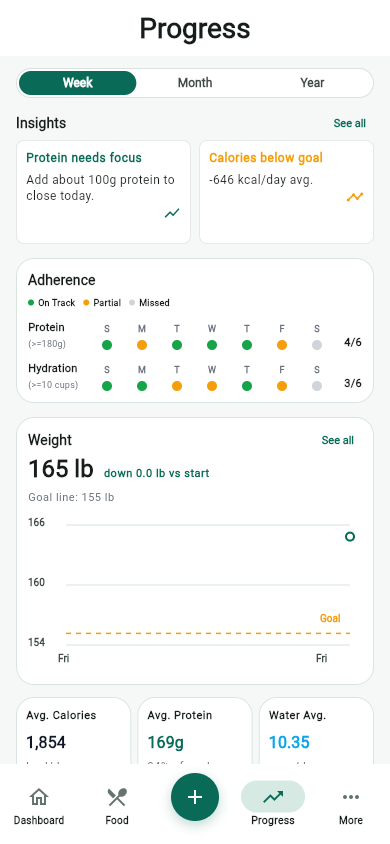
GLP-1 medications have changed the weight-management conversation because they can lower appetite and make smaller meals feel normal. That also changes the job of a food logging app. The question is no longer only whether calories are lower; it is whether the smaller amount of food still covers the basics your body needs.
MyFitLife is not a medical tool and cannot tell you how to use, start, stop, or dose a prescription. The useful role for the app is operational: keep protein, hydration, meal timing, grocery planning, and repeatable foods visible so your clinician or dietitian has a clearer picture of what is actually happening.
Start with the risk created by lower appetite
When appetite drops, missed meals can look like progress at first. The technical problem is that a lower total intake can also crowd out protein, fiber, fluids, and micronutrient-rich foods. A better tracking system treats calories as one signal, not the whole dashboard.
In MyFitLife, start by logging enough detail to see the shape of the day: what meal was eaten, how much protein it contributed, whether water stayed on track, and whether the meal was a repeatable option or an improvised fix.
Track protein before the day gets away from you
Protein is the first planning anchor because it is easy to miss when meals get smaller. Instead of waiting until dinner to recover the day, build a morning or lunch default that reliably contributes protein without requiring a large volume of food.
- Save a breakfast or lunch that you tolerate well and can repeat.
- Use recent foods for the protein anchors you log often.
- Ask Coach Milo for smaller high-protein meal ideas when appetite is low.
- Review weekly protein consistency before changing the entire plan.
Make fiber gradual and visible
Fiber is having a broader cultural moment, but the practical GLP-1 question is how to add it without making meals uncomfortable or unrealistic. Whole grains, beans, lentils, fruit, vegetables, nuts, and seeds can all help, but the right move is usually gradual.
MyFitLife helps by making the surrounding routine visible. Pair higher-fiber meals with water tracking, save the combinations that feel good, and use grocery lists to keep the same reliable ingredients available. When nutrition details are available for a food, review them before treating a marketing claim as the whole answer.
Use hydration as a daily guardrail
Hydration is easy to overlook when hunger cues are quieter. Put water in the same workflow as meals: log a cup in the morning, add water around meals, and review Hydration history at the end of the week. If higher-fiber meals are part of the plan, hydration becomes even more important as a habit.
Turn small meals into a grocery system
A GLP-1-friendly food routine often needs smaller portions, higher nutrient density, and less decision fatigue. That is exactly where saved meals, Pantry, Recipe AI, and Grocery work together. Save the meals that fit, then build a grocery list around those meals instead of shopping from vague intentions.
- Pick two protein anchors you can eat even on low-appetite days.
- Add one fiber source that is easy to tolerate.
- Log water around meals and review weekly hydration patterns.
- Save the meals that work and move ingredients into Grocery.
- Bring the logged pattern to a clinician or dietitian when medical guidance is needed.
The MyFitLife answer
The best tracking setup for GLP-1 users is not a stricter calorie scoreboard. It is a simpler nutrition operations system: protein anchors, gradual fiber, steady hydration, saved meals, grocery planning, and coach prompts that help you make the next meal concrete.
Sources and further reading
- Nutritional Priorities to Support GLP-1 Therapy for Obesity American Society for Nutrition
- IFIC Spotlight Survey: Americans' Perceptions Of Protein Quality & Labeling International Food Information Council
- IFIC Spotlight Survey: Americans' Perceptions Of Fiber & Whole Grains International Food Information Council
- About Water and Healthier Drinks Centers for Disease Control and Prevention
Related articles
- Fibermaxxing Without Breaking Your Macros: What Should You Track?
- Best Food Logging App for Weight Loss: What to Look For
- How to Track Macros Without Overcomplicating Your Day
Take your nutrition with you.
Log food, track progress, and meet your goals anywhere.