Calorie Tracking vs Macro Tracking: Which Should You Use?
Understand when calorie tracking is enough, when macro tracking helps, and how to choose a simpler system.
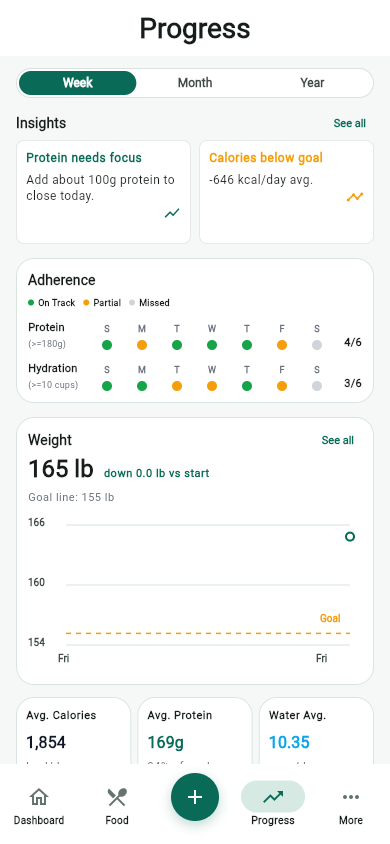
Calorie tracking and macro tracking answer different questions. Calories show the broad energy picture. Macros show the mix of protein, carbs, and fat that makes up those calories.
Use calorie tracking when you need a simple start
If you are new to logging, calories and serving sizes may be enough at first. This keeps attention on consistency, meal timing, snacks, drinks, and portions.
Use macro tracking when meal quality needs more structure
Macro tracking helps when calories are on target but meals still feel random. Protein, carbs, and fats can show whether breakfast is too light, dinner carries too much of the day, or snacks are crowding out meals.
Do not change every target at once
If the plan feels hard to follow, make one adjustment at a time. For many people, that means improving protein consistency before fine-tuning carbs and fats.
Choose the simplest useful system
- Start with calories if you need visibility.
- Add protein if meals are not satisfying or consistent.
- Review carbs and fats when training, hunger, or preferences require more detail.
- Use progress trends before changing targets.
MyFitLife supports both approaches: you can keep the Dashboard simple or go deeper into meal and progress patterns when you need more context.
Sources and further reading
- Tips for Maintaining Healthy Weight Centers for Disease Control and Prevention
- Steps for Losing Weight Centers for Disease Control and Prevention
- Dietary Guidelines for Americans, 2025-2030 U.S. Department of Health and Human Services and USDA
Related articles
- Best Food Logging App for Weight Loss: What to Look For
- How to Track Macros Without Overcomplicating Your Day
- Hydration Tracker for Weight Loss Habits: What to Track
Take your nutrition with you.
Log food, track progress, and meet your goals anywhere.